0%
"This program enhanced my professional expertise"
Can't Attend Live?
No problem. Register anyway — you'll receive access to the recording within 7 days of the live session, fully eligible for CE credit.
Tech Requirements
Live sessions are held via Zoom, and all course activities are completed in our online course portal.

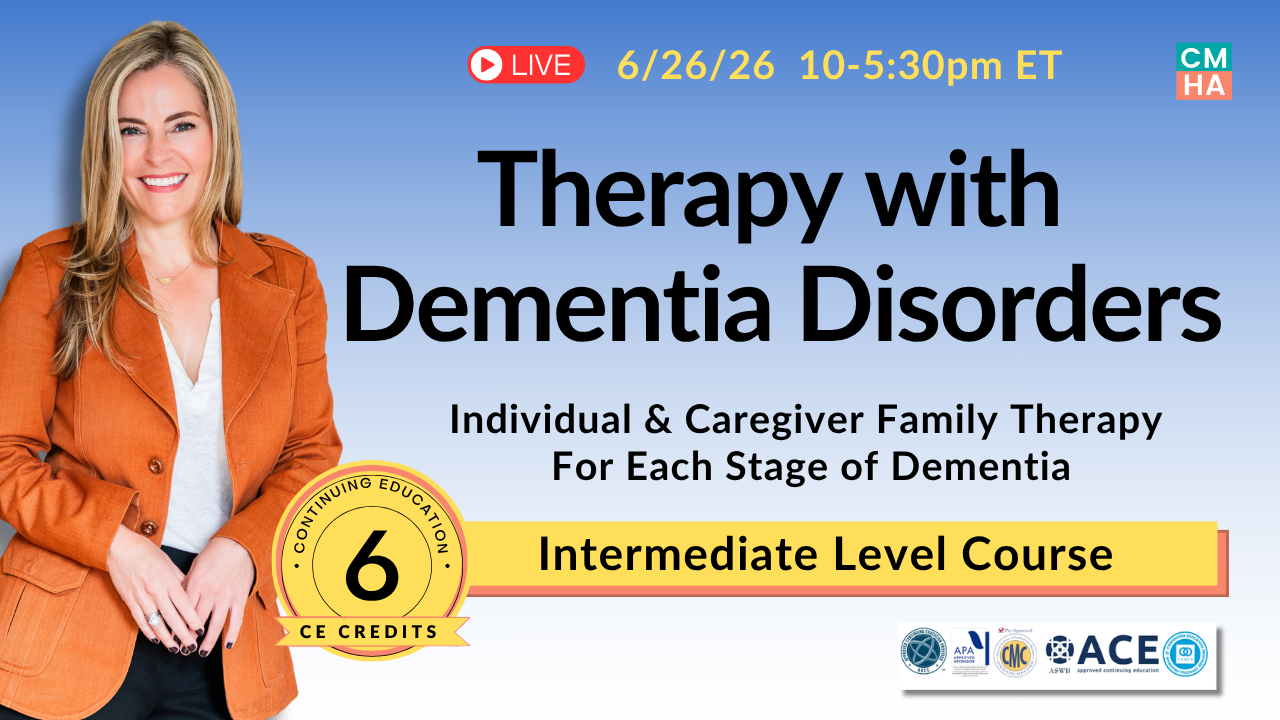
Therapists are increasingly on the front lines of dementia care — yet most received little to no training on how to respond. This workshop closes that gap. You'll leave clinically confident, practically equipped, and ready to provide skilled, compassionate care at every stage of the dementia journey.
How to tell the difference between normal aging and red flags — and how to talk with clients about cognitive change without alarming them.
Cognitive and mood screeners, functional assessment, ethical collateral input, documentation essentials, and when to refer.
Adapt individual therapy so your client feels respected, understood, and safe — even as their abilities change. Including life review, reminiscence therapy, identity and dignity work, and responding to suicide risk after diagnosis.
And recognizing apathy, agitation, anxiety, and other symptoms that surface in the therapy room.
Address depression, apathy, trauma history, and substance use — within the context of dementia
Know when and how to bring family into the room while protecting the person with dementia's dignity and autonomy, while simultaneously addressing caregiver concerns. Provide caregiver family therapy across the stages of dementia — including work with reluctant, resentful, and burned-out caregivers
Help families approach the hardest conversations: stopping driving, transitioning to memory care, medication and financial management, balancing safety with independence and dignity. Manage complex family dynamics and real-world clinical challenges across every stage of dementia
Develop an equity-informed practice, including race, ethnicity, LGBTQIA+ considerations, medical mistrust, and culturally responsive care.
Can't Attend Live?
No problem. Register anyway — you'll receive access to the recording within 7 days of the live session, fully eligible for CE credit.
Tech Requirements
Live sessions are held via Zoom, and all course activities are completed in our online course portal.


Three simple steps to earning your CE credits
Once you register, you'll receive a welcome email with your Zoom link and everything you need to join.
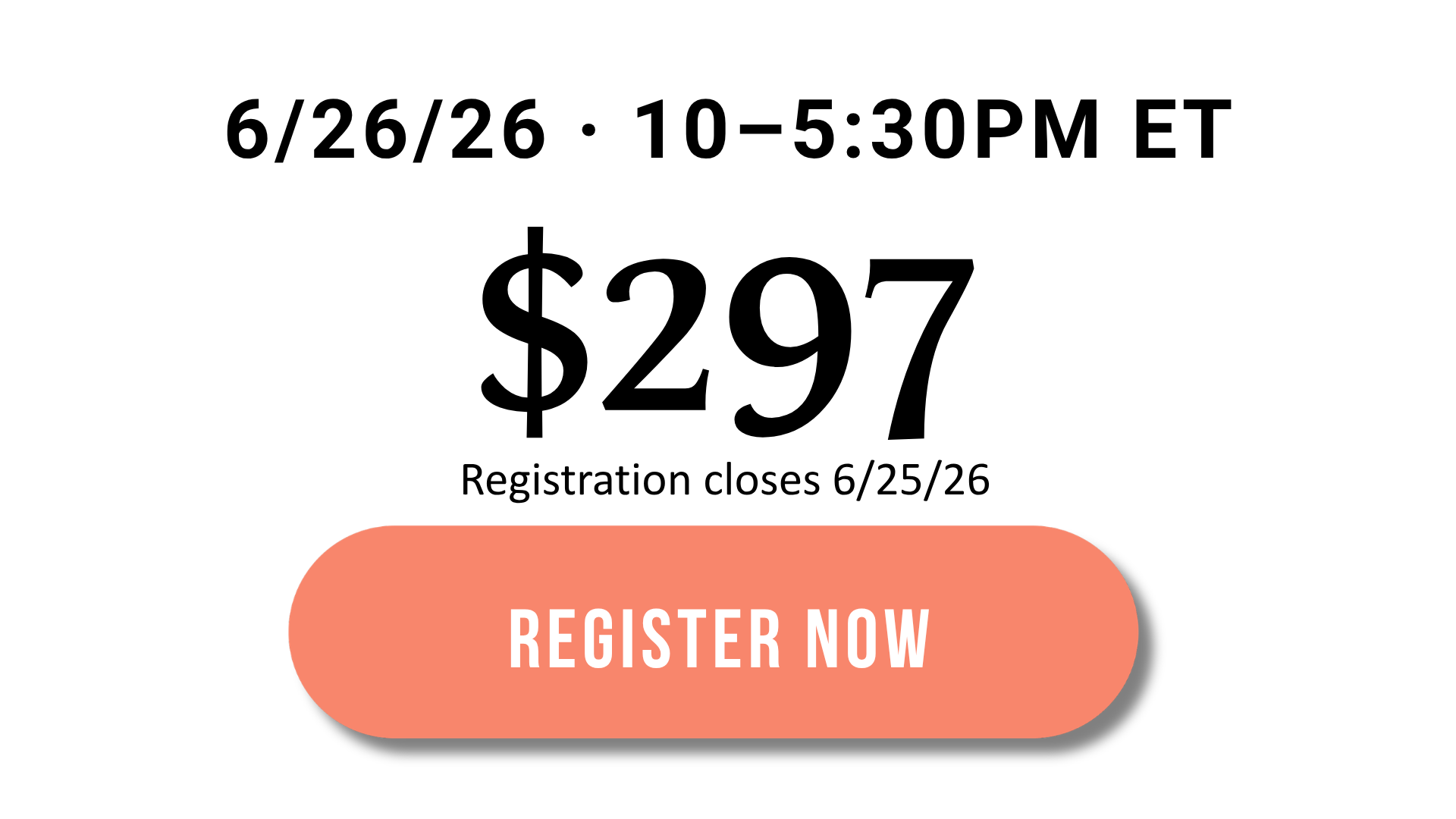
Attend the full-day training on June 26, 2026, from 10:00am–5:30pm ET and earn 6 CE credits in a single day — with real-time connection and Q&A.
At the end of the live event, you'll receive a secret word. Log into our student portal, enter the secret word to unlock the program evaluation, complete it, and your CE credits are yours. Attendance is also verified through Zoom records.
Life happens. You'll have access to the recording approximately 7 days after the live event — and it's also eligible for CE credit following successful completion of the post-test. You'll have lifetime access to the recording and 3 years to complete the program for CE credit.
Therapists are often the first to notice cognitive changes—and to hold the fear, grief, and family tension that follow. This workshop helps you distinguish typical brain aging from warning signs of mild cognitive impairment and dementia, and understand how depression, anxiety, trauma, and sleep problems can mimic or worsen cognitive symptoms—and why treatment still matters.
You'll leave with a practical, therapy-ready assessment toolkit: brief cognitive and mood screeners, functional assessment, and caregiver or collateral input, plus a clear approach to differentiating dementia, depression, and delirium. We will cover evidence-informed psychotherapy adaptations across stages, including life review and reminiscence therapy and caregiver and family therapy, and address common clinical themes: ambiguous loss, neuropsychiatric symptoms (apathy, agitation, anxiety), increased suicide risk after diagnosis, and helping the person living with dementia maintain meaning, identity, and dignity.
You will also learn strategies for working with reluctant, resentful, or burned-out caregivers, and for helping families have difficult conversations—assessing when collaborative decision-making is possible, and when to pivot to supporting caregivers in making compassionate safety decisions about medication management, financial management, driving cessation, and independent living, while doing the best to honor dignity. Finally, you will receive a clear referral roadmap and key community resources.
Course Schedule 6/26/26 | 10:00am – 5:30pm ET / 7:30am – 2:30pm PT
1) Typical vs. Atypical Brain Changes With Aging (30min)
2) Mild Cognitive Impairment, Dementia, and Common Dementia Disorders (30min)
3) The Link Between Mental Health and Dementia (30min)
4) Cultural Considerations and Health Disparities in Dementia Care (30min)
5) Understanding Neuropsychiatric Symptoms (30min)
6) Assessment Toolkit for Therapists (30min)
7) Psychotherapy With the Person Living With Dementia (60min)
8) Caregiver Family Therapy (60min)
9) Caregiving Dilemmas, Difficult Conversations and Compassionate Decisions (60min)
By the end of this workshop, participants will be able to:
With successful completion of course requirements, this course is eligible for 6 Clinical Continuing Education (CE) Credits/6 CMC Contact Hours for therapists, counselors, social workers, psychologists, care managers, and more.
Registrant is responsible for ensuring that CE credits meet the criteria for their own jurisdiction requirements. See below for CE approval.
This program will include unique considerations for BIPOC and LGTBQ+ older adults related to dementia disorders, and discuss the impact of ageism and ableism on mental health and well-being.
Dr. Regina Koepp is a Stanford-trained, board certified clinical psychologist, geropsychologist, and founder and CEO of the Center for Mental Health & Aging. Dr. Koepp is a sought-after speaker and educator, and provides staff training and continuing education courses to professionals on topics surrounding mental health and aging.
She was formerly a lead psychologist at University of Vermont Medical Center, Assistant Professor at Emory University Department of Psychiatry, and psychologist at the Atlanta VA Health Care System, where she provided direct patient care and consultation on the Geropsychiatry Outpatient Mental Health team for more than a decade. During this time, Dr. Koepp also served on the VA Central Office's Geriatric Mental Health Field Advisory Committee.
She is formerly Vice Chair of the Georgia Psychological Association Ethics Committee and served on the Atlanta VA Medical Center's Ethics Committee, the Clinical Advisory Workgroup, and as chair of the Psychology Professional Standards Board for several years.
Dr. Koepp has been featured in the New York Times, NPR, Chicago Tribune, Next Avenue, AARP, and other national media outlets. She is a contributing writer at Psychology Today and Psychotherapy Networker, where she discusses mental health and aging.
Dr. Koepp earned her doctorate at the PGSP-Stanford PsyD Consortium and completed her post-doctoral fellowship at Emory University Department of Psychiatry & Behavioral Sciences where she won the Richard W. Morrell Community Commitment Award.
Financial: Regina Koepp, PSYD, ABPP is founder and owner of the Center for Mental Health & Aging (CMHA) and co-director of the CMHA CE Training Program. She serves on the board of GrayHawk Health. She received royalties from courses published with PESI, Inc.
Non-financial: Regina Koepp is a member of ASA.
Note: The CMHA CE Training Program advisory committee independently reviews Dr. Koepp's CE presentations to ensure that Dr. Koepp's presentations meet CE program requirements.
There is no commercial support or conflict of interest for this CE program, content, or sponsor.
Can't Attend Live?
No problem. Register anyway — you'll receive access to the recording within 7 days of the live session, fully eligible for CE credit.
Tech Requirements
Live sessions are held via Zoom, and all course activities are completed in our online course portal.
Total Bonus Value: $246 — Yours FREE with enrollment

Get immediate access to two practical, bite-sized trainings with companion workbooks that you can start using with your clients right away.
✔️ 5 Expert Tips for Helping Older Clients with Memory Loss — Exclusive bonus training + workbook (Value: $47)
✔️ Benefits of Early Diagnosis of Dementia — Exclusive bonus training + workbook (Value: $47)


Get immediate access to evidence-based therapy tools, handouts, and clinical guides designed to save you time and give you confidence in session.
These ready-to-use resources help you address real-world challenges faced by older adults and their families.
✔️Ultimate Caregiving Guide — Exclusive therapy tools and caregiving resources (Value: $47)
✔️ Memory Loss Guide for Families— Clinician’s guide to screen and understand gambling among older adults (Value: $47)
✔️ Dementia 101 Guide — Exclusive therapy tool to help clients prepare for driving retirement (Value: $47)

Can't Attend Live?
No problem. Register anyway — you'll receive access to the recording within 7 days of the live session, fully eligible for CE credit.
Tech Requirements
Live sessions are held via Zoom, and all course activities are completed in our online course portal.


Register for this intensive training course without risk. If you're not completely satisfied, we offer a 7-day money back guarantee.
We’re that confident you'll find this learning experience to be all that's promised and more than you expected.
Can't Attend Live?
No problem. Register anyway — you'll receive access to the recording within 7 days of the live session, fully eligible for CE credit.
Tech Requirements
Live sessions are held via Zoom, and all course activities are completed in our online course portal.

We’re not just another mass market CEU provider. We’re on a mission to ensure every mental health professional has tools to meet the mental health needs of older adults.
✔️ Specialized Training for Aging Clients – Unlike other CE providers that go broad, we go deep and provide trainings exclusively on the mental health needs of older adults.
✔️ Expert-Led - Our courses are led by experts in the field of mental health and aging.
✔️ Mission-Driven & Inclusive – We are a woman-owned, independent company committed to diversity, equity, and inclusion in aging mental health care.

Social Workers
Center for Mental Health + Aging, #1801, is approved to offer social work continuing education by the Association of Social Work Boards (ASWB) Approved Continuing Education (ACE) program. Regulatory boards are the final authority on courses accepted for continuing education credit. ACE provider approval period: 3/25/2026-3/25/2029. Social workers completing this course receive 6 clinical continuing education credits.
Psychologists
Center for Mental Health & Aging is approved by the American Psychological Association to sponsor continuing education for psychologists. Center for Mental Health & Aging maintains responsibility for this program and its content.
Counselors
Center for Mental Health and Aging (CMHA) has been approved by NBCC as an Approved Continuing Education Provider, ACEP No. 7230. Programs that do not qualify for NBCC credit are clearly identified. Center for Mental Health and Aging (CMHA) is solely responsible for all aspects of the programs.
Care Managers
CMHA is approved by the National Academy of Certified Care Managers (NACCM) as a continuing education provider, #21-905CMHA. This activity approved for 6 CMC contact hours.
Licensed Marriage and Family Therapists (LMFTs)
Center for Mental Health & Aging (CMHA), Provider #1032775, is approved by the California Association of Marriage and Family Therapists (CAMFT) to sponsor continuing education for California LMFTs, LCSWs, LPCCs, and LEPs. CMHA maintains responsibility for this program/course and it’s contents
Center for Mental Health & Aging is approved by the American Psychological Association to sponsor continuing education for psychologists. In many state licensing jurisdictions, APA approved continuing education programs qualify for LMFT CE credits. See what your state requires here.
Nurses
CMHA is an approved provider by the American Psychological Association (APA), which is recognized by the ANCC for behavioral health related activities.
This course is available LIVE on 10/29/25 via Zoom. You must attend LIVE to earn LIVE Ethics CE Credits. Attendance is taken for live participation. A Zoom link will be emailed following purchase. Registration for Live event closes 10/28/25.
Can't attend live? No problem, when you register, you'll be automatically enrolled in the recorded version of this webinar- available 24-48 hours after live program. You'll get instant access to the bonuses when you purchase this course (if you purchase within the "limited time offer" window).
Following purchase, you'll receive an email from "Dr. Regina Koepp- Center for Mental Health & Aging" with your receipt and another email with links to your courses (don't forget to check your spam folder). For LIVE CE Webinars, you’ll receive an email with a Zoom link to join on the day of the live webinar.
You can always log in to your account and access all of your courses this way as well.
This is a limited time offer. To get access to this course at the "early bird" rate and the free bonuses, you must purchase by the deadline. If you miss the deadline, you can purchase these courses at their regular rates on our website here.
Participants will have their participation registered through the Center for Mental Health & Aging. To earn continuing education (CE) credits you must complete the following steps for on demand/pre-recorded courses::
Certificates of completion will be emailed immediately following submission of electronic survey and also available for download in the course platform. It's that simple!
Center for Mental Health & Aging is committed to accessibility and non-discrimination in continuing education activities and will conduct all activities in conformity with the American Psychological Association’s Ethical Principles for Psychologists. If participants have special needs, reasonable efforts will be made to accommodate them. Please contact support@cmhaging.com with questions, concerns or to request special accommodations.
CMHA will respond to grievances in a reasonable, ethical, and timely manner. Grievances may be submitted by course participants in writing to support@cmhaging.com. CMHA’s complete Grievance Procedure will be provided upon request. You may request Grievance Procedure by emailing support@cmhaging.com.
The following system requirements help to reduce tech problems:
ALL LIVE workshop refunds will be honored for cancellations if received within 30 days of purchase AND at least one (1) day prior to the date of a live webinar or live workshop. All on demand/pre-recorded courses are backed by a 7-day money back guarantee. Please note that payments made via Credit Card have certain fees associated with them, some of which are non-recoupable and are therefore non-refundable by Center for Mental Health & Aging. Therefore, payments made by Credit Card will have a three percent (3%) credit card fee deducted from the refund. Should you have any questions regarding our refund policies, please contact support@cmhaging.com.
For additional questions email support@cmhaging.com.
Registrant is responsible for ensuring that CE credits meet the criteria for their own jurisdiction requirements.
Content and materials in this course may include interventions and modalities that are beyond the authorized practice of your profession. As a licensed professional, you are responsible for reviewing the scope of practice, including activities that are defined in law as beyond the boundaries of practice in accordance with and in compliance with your profession’s standards.