Join The Movement for Mental Health + Aging

0

professionals trained to meet the mental health needs of older adults
0

clinicians enrolled in the Mental Health + Aging Certificate

0%

would recommend us to a colleague

Limitless

older lives benefiting

Become the Go-To Therapist for Older Adults

Build a specialty that sets you apart — and make a living and impact doing it.


Older adults are entering therapy more than ever before and they deserve therapists who have the skills to meet their unique mental health needs and resiliencies.


If you've ever wondered...
➤ Is this normal aging, dementia, or depression?
➤ How do I honor my client's autonomy when her adult children push for control?
➤ What does depression, trauma, or substance use actually look like in late life — and how does good therapy need to adapt?
➤ How do I support someone through retirement, chronic illness, or the loss of a lifelong partner?
➤ What does psychotherapy that truly honors dignity, meaning, and choice at end of life look like?
Then specialty training in mental health and aging is for you.


Why Build A Specialty with Older Adults?

Most therapists who come to this specialty notice they're already working with older clients, but realize they've never actually had training to meet the unique mental health needs of older adults.

Does this sound like you?


Your practice attracts older clients because you yourself are older.


You were a caregiver for someone you loved, and saw into a world you'd never deeply seen before filled with loss, love, and heartbreaking decisions.

You sat across from an 86-year-old and thought: there is so much more here than society gives them credit for.

You have the lived experience, but know you need the clinical skills to match.

However you arrived working with older clients, the question is the same — do you have what this stage of life actually asks of you as a therapist?

You have the compassion and skill.

The Mental Health + Aging Certification will give you the rest: current clinical tools, clear frameworks, and colleagues who understand both the complexity and the beauty of later life.

What You Can Do as a Certified Mental Health + Aging Specialist


Build a specialty caseload. Fill your practice with older adults and their families — individual, couples, family, and group work.


Become the name on the referral list. Take referrals from physicians, care managers, senior living communities, and hospice teams who are actively looking for someone qualified.


Lead workshops Lead workshops for community organizations and senior centers — or train other clinicians with CEU courses.


Consult beyond the therapy room. Consult with aging services programs, home care agencies, and wellness organizations that need clinical expertise they don't have in house.


Write, speak, and shape the field. Present at conferences, publish, and help define what good care in later life looks like.


3 Steps to Become a Certified Mental Health + Aging Specialist

Each level builds on the one before it — from clinical foundation, to applied case work, to the certification itself.

1

Level 1 — Certificate

5 Weeks · 18 CE Credits
  • Starts Monday, October 5, 2026
  • 18 hours of clinical video training delivered over 5 weeks, covering everything from ageism and cognition to depression, trauma, suicide, and end-of-life care
  • 3 live community gatherings on Zoom with Dr. Koepp
  • Lifetime access to online student portal with videos, slides, handouts, assessments, and practice resources
  • Professional Certificate + digital badge on completion
2

Level 2 — Clinical Case Consultation

5 Sessions · 90 Minutes Each
  • Starts Friday, November 13, 2026
  • Join a small, closed cohort of just 6–10 clinicians for 5 sessions, bring your most complex older adult cases, and work through them alongside Dr. Koepp — leaving each session with greater clarity and confidence
  • Attendance of 4 of 5 sessions required
  • Present at least one de-identified case (client 65+)
  • Eligibility criteria apply
3

Level 3 — Certification

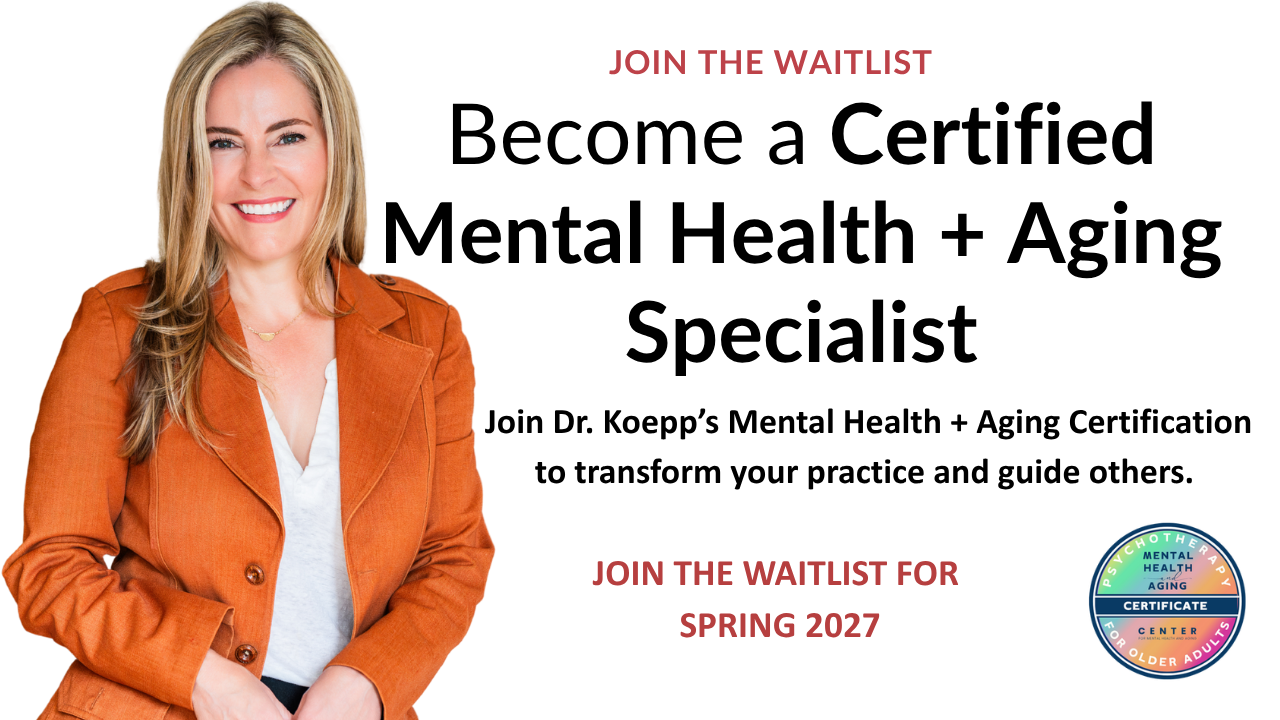
Become a Certified Mental Health + Aging Specialist

After completing Levels 1 and 2, you're eligible to apply for certification and join our most exclusive group of therapists. A Certified Mental Health + Aging Specialist designation signals to colleagues, employers, and referral sources that you meet a clear, rigorous standard of aging-informed practice.
  • Distinction as a CMHA Mental Health + Aging Specialist
  • Provider Directory Profile + quarterly alumni gatherings
  • Renews every 2 years to keep your credential current

Register Today- Hurry! Registration Closes 10/2/26

Pick the level that fits your professional goals

Level 1 — Certificate

Earn Your Mental Health And Aging Certificate

$799 $3,401

An evidence-based, aging-informed training you can apply immediately in clinical work with older adults—while earning 18 CE credits and receiving ready-to-use resources.

  • 18-hour CE course
  • Bonus handouts + guides
  • Bonus mini trainings
  • 3 Community Connection meetings
  • Badge + certificate
  • Marketing toolkit
Levels 1, 2 + 3 — Certification Bundle

Become A Certified Mental Health + Aging Specialist

$1,699 $8,524

For clinicians ready to be a leader in aging-informed therapy. Includes the Level 1 Certificate, Level 2 Consultation Group, AND Level 3 application and bonuses.

  • 18-hour CE course
  • Bonus handouts + guides
  • Bonus mini trainings
  • 3 Community Connection meetings
  • Badge + certificate
  • Marketing toolkit

  • 5-week (90-min) small, closed consultation group
  • $200 Discount on Future Case Consultation Cohorts

  • Initial Certification Application Fee included
  • Certification and distinction as a CMHA Mental Health + Aging Specialist
  • Badge + certificate as a CMHA Mental Health + Aging Specialist
  • Provider Directory Profile
  • Quarterly alumni gatherings
Levels 2 + 3 Requirements:
  • Must have 100+ clinical hours working with adults 65+.
  • Must be licensed to practice therapy and be in good standing.
  • Must be able to provide therapy independent of a supervisor.
  • Level 3 requires successful completion of Levels 1 and 2.
  • Certification requires renewal every 2 years with CMHA to maintain certification status and access to alumni meetings.

Note: Requirements must be met in order to be a CMHA Mental Health + Aging Specialist. Certification is not guaranteed. Please review requirements carefully prior to enrolling.

From Early Career To Seasoned Professionals- Therapists are Raving About This Program


How Becoming a Certified Mental Health + Aging Specialist Benefits You.

A specialty in mental health and aging is the most needed, most meaningful, and fastest-growing specialty in mental health care today.
01.

Stand Out In Your Field

Be the name colleagues pass along when a case involves memory loss, caregiving, or late-life grief.

02.

Attract More Clients

Physicians, care managers, and senior communities are looking for a therapist who specializes with older adults.

03.

Earn 18 CE Credits

Satisfy your licensure requirements with interventions you can use immediately.

04.

Increase Your Professional Credibility

Go from “I see some older clients” to the specialist your community relies on.

05.

Make a Meaningful Impact

More than half of older adults with a mental illness receive no treatment. We can change this.

06.

Gain Tools for Your Own Life

Your own aging — and your loved ones’ — is a part of life. Learn to do it with clarity, steadiness, and compassion.

Learn About The 3 Mental Health + Aging Levels

LEVEL 1 — CERTIFICATE

This is the first step in becoming a sought-after expert in mental health and aging. A truly inspiring, self-paced 18 CE credit course.

This Certificate program will give you new insights into psychotherapy for older adults using research-based assessments and effective interventions.

When you enroll, you're not just getting a course. You're getting the most comprehensive mental health and aging training available anywhere — plus expert mentorship, CEUs, and practical tools you can bring directly into your work with clients.

Official Start Date

  • Monday, October 5, 2026
  • New modules released every Monday at 9:00 am ET

Core Training & CEUs

$1,182 VALUE
  • Lifetime access to 18 hours of pre-recorded CEU training (18 CE Credits), delivered over 5 weeks. ($882 value)
  • Online student portal with slides, handouts, assessments, and practice resources. ($300 value)

Your access never expires — return to the videos, slides, and handouts as often as you like.

Weekly Training Modules

15 MODULES · 5 WEEKS · 18 CE CREDITS

This Mental Health + Aging Certificate Course (18-hour course) is released over a 5-week period. Each Monday morning at 9:00 am ET you'll receive several recorded video trainings (about 3 hours/week). Each module includes videos, slides, downloadable guides, resources, and a post-test to reinforce learning. We will host 3 live community gatherings on Zoom.

Week 1 — October 5, 2026:
  • Module 1: Aging, Ageism & The Importance of Belonging
  • Module 2: Relationships
  • Module 3: Common Life Issues and Transitions for Older Adults
Week 2 — October 12, 2026:
  • Module 4: Cognition and Aging
  • Module 5: Caregiver Family Therapy with Families Facing Dementia & Life-Altering Medical Conditions
  • Module 6: Ethical Principles and Common Ethical Dilemmas
Week 3 — October 19, 2026:
  • Module 7: Evidence-Based Recommendations for Optimal Aging
  • Module 8: Anxiety Disorders and Older Adults
  • Module 9: Depression and Older Adults
  • Module 10: Insomnia and Older Adults
Week 4 — October 26, 2026:
  • Module 11: Trauma and Older Adults, including Post-Traumatic Growth
  • Module 12: Suicide and Older Adults
  • Module 13: Substance Abuse Among Older Adults
Week 5 — November 2, 2026:
  • Module 14: End of Life Psychotherapy
  • Module 15: Grief

Career-Boosting Bonuses

$2,219 VALUE

These aren't filler extras. Each one was designed to help you grow your expertise, your visibility, and your impact.

  • 3 Community Gatherings with Dr. Regina Koepp — Connect live on Zoom with Dr. Koepp and a community of professionals committed to improving mental health care for older adults. ($900 value)
    • Wednesday, October 7, 2026 — 3:00–4:00 pm ET on Zoom
    • Wednesday, October 21, 2026 — 3:00–4:00 pm ET on Zoom
    • Wednesday, November 4, 2026 — 3:00–4:00 pm ET on Zoom
    • Attendance is not required for live community gatherings, but is strongly encouraged.
  • The Marketing Toolkit — Your professional Certificate, a digital badge you can display on your website and LinkedIn, plus done-for-you email and LinkedIn templates to announce your new specialty to referral sources and colleagues. ($450 value)
  • Exclusive Clinical Handouts & Guides — Ready-to-use therapy tools and client workbooks covering life review, dementia, loneliness, financial exploitation, and more. ($428 value)
  • 3 Mini Trainings with Workbooks — Practical, expert-led deep dives you can apply immediately with your very next client. ($141 value)
  • Provider Directory Profile — We actively feature you in our Provider Directory and market you directly to families and professionals searching for aging specialists in your area. This is a referral engine — and it works for you. ($300 value)
LEVEL 2 — CLINICAL CASE CONSULTATION

Small Group Case Consultation

Building on everything you've learned and applied through Level 1, you will move beyond knowledge into real clinical mastery — bringing your most complex older adult cases into a small, closed cohort of just 6–10 peers, working through them alongside Dr. Koepp, and meeting a defined standard of professional competency that distinguishes you as the clinician colleagues trust, referral sources seek out, and older adults and their families need most.

Official Start Date

  • Friday, November 13, 2026

Core Training

$2,625 VALUE
  • 5-week small-group case consultation — 90 minutes per session, in a closed cohort of just 6–10 clinicians. You'll bring real cases, work through complex clinical questions, and leave each session with greater clarity and confidence. ($2,625 value)
  • Level 2 is required for Certification.

Consultation Dates + Times

  • Fridays: Nov 13 • Nov 20 • Dec 4 • Dec 11 • Dec 18, 2026
  • No meeting Friday, Nov 27 — Thanksgiving break
  • Fridays 12:00–1:30 pm ET (opens first)
  • Fridays 2:00–3:30 pm ET (opens when first cohort fills)
  • Fridays 10:00–11:30 am ET (opens when second cohort fills)

Important: To keep cohorts balanced and fair, participants are assigned to a cohort. You'll receive your cohort time and Zoom link after enrollment.

What's Expected

  • Present at least one de-identified case involving an older adult client (65+)
  • Participate actively in discussion (questions, reflections, feedback)
  • Apply evidence-based concepts from the training
  • Maintain strict confidentiality (de-identified material only)
  • Contribute with professionalism, respect, and care
  • Keep your video camera on for the full meeting time
  • Attend at least 4 out of 5 consultation sessions (one absence permitted with advance notice)

Application

  • Application required to ensure you meet eligibility criteria.

After enrollment, you will be asked to complete a brief application. If you enroll and do not meet eligibility requirements, you will be fully refunded. Please review the requirements below before enrolling.

Requirements

  • Must have 100+ clinical hours working with adults 65+
  • Must be licensed to practice therapy and be in good standing
  • Must be able to provide therapy independent of a supervisor
  • Must have a minimum of a master's degree and hold a state or national license in one of the following professions:
  • Psychologist
  • Counselor
  • Social Worker
  • Marriage & Family Therapist
  • Mental Health Counselor / Professional Counselor
  • Licensed Creative Arts Therapist
  • Psychoanalysts
  • Board Certified Behavioral Analysts

Exclusive Bonuses

$399 VALUE
  • Initial Level 3: Certification Application Fee — Included with registration for Level 2 Consultation/Certification. ($199 value)
  • $200 Discount on Future Case Consultation Cohorts — Many clinicians who participate in our case consultation series wish to join future cohorts. After you successfully complete the first cohort, you'll get $200 off any future case consultation cohort you wish to join. ($200 value)
LEVEL 3 — CERTIFICATION

Become a Certified Mental Health + Aging Specialist

The highest level of distinction in aging-informed psychotherapy.

Join our most exclusive group of Mental Health + Aging therapists. The final step in the Mental Health + Aging training program, the Level 2 Certification Track results in your designation as a CMHA Certified Mental Health + Aging Specialist — setting you apart as a recognized leader in aging-informed therapy.

Building on everything you've learned and applied through Levels 1 and 2, you're now eligible to apply for certification and become a Certified Mental Health + Aging Specialist.

Core Feature

$1,000 VALUE
  • Certification and distinction as a CMHA Mental Health + Aging Specialist — A credential that signals to colleagues, employers, and referral sources that you meet a clear, rigorous standard of aging-informed practice. ($300 value)

Exclusive Bonuses

$1,099 VALUE
  • Provider Directory Profile — We actively feature you as a Certified Mental Health + Aging Specialist in our Provider Directory and market you directly to families and professionals searching for aging specialists in your area. This is a referral engine — and it works for you. ($300 value)
  • Quarterly CMHA Mental Health + Aging Specialist Community Gatherings — Stay connected with other Certified Mental Health + Aging Specialists doing this work, with meetings four times a year. ($600 value)
  • Initial Certification Application Fee — Included with registration for Level 2 Consultation. ($199 value)

Application Process

  • Application required to ensure you meet eligibility criteria.
  • After completing Level 2, you'll be eligible to apply for Level 3: Certification. All requirements must be met to become a CMHA Mental Health + Aging Specialist — certification is not guaranteed, so please review the requirements carefully before enrolling.

Requirements

  • Must have 100+ clinical hours working with adults 65+
  • Must be licensed to practice therapy and be in good standing
  • Must be able to provide therapy independent of a supervisor
  • Level 3 requires successful completion of Levels 1 and 2
  • Must have a minimum of a master's degree and hold a state or national license in one of the following professions:
  • Psychologist
  • Counselor
  • Social Worker
  • Marriage & Family Therapist
  • Mental Health Counselor / Professional Counselor
  • Licensed Creative Arts Therapist
  • Psychoanalysts
  • Board Certified Behavioral Analysts

Certification + Recertification

  • Upon completion, you'll earn distinction as a "CMHA Certified Mental Health + Aging Specialist"
  • Professional Certification/Certificate + Digital Badge
  • Certification requires renewal every 2 years with CMHA to maintain certification status and access to alumni meetings. Learn more about Recertification here.

Your certification renews every two years, ensuring your skills stay current and your credential stays credible — a standard that builds trust with everyone you serve.

Note: By applying for certification, you agree to adhere to the Center for Mental Health + Aging Professional Code of Ethics and your respective professional licensing board's ethical standards.

Register Today - Hurry! Registration Closes 10/2/26

Pick the level that fits your professional goals

Level 1 — Certificate

Earn Your Mental Health And Aging Certificate

$799 $3,401

An evidence-based, aging-informed training you can apply immediately in clinical work with older adults—while earning 18 CE credits and receiving ready-to-use resources.

  • 18-hour CE course
  • Bonus handouts + guides
  • Bonus mini trainings
  • 3 Community Connection meetings
  • Badge + certificate
  • Marketing toolkit
Levels 1, 2 + 3 — Certification Bundle

Become A Certified Mental Health + Aging Specialist

$1,699 $8,524

For clinicians ready to be a leader in aging-informed therapy. Includes the Level 1 Certificate, Level 2 Consultation Group, AND Level 3 application and bonuses.

  • 18-hour CE course
  • Bonus handouts + guides
  • Bonus mini trainings
  • 3 Community Connection meetings
  • Badge + certificate
  • Marketing toolkit

  • 5-week (90-min) small, closed consultation group
  • $200 Discount on Future Case Consultation Cohorts

  • Initial Certification Application Fee included
  • Certification and distinction as a CMHA Mental Health + Aging Specialist
  • Badge + certificate as a CMHA Mental Health + Aging Specialist
  • Provider Directory Profile
  • Quarterly alumni gatherings
Levels 2 + 3 Requirements:
  • Must have 100+ clinical hours working with adults 65+.
  • Must be licensed to practice therapy and be in good standing.
  • Must be able to provide therapy independent of a supervisor.
  • Level 3 requires successful completion of Levels 1 and 2.
  • Certification requires renewal every 2 years with CMHA to maintain certification status and access to alumni meetings.

Note: Requirements must be met in order to be a CMHA Mental Health + Aging Specialist. Certification is not guaranteed. Please review requirements carefully prior to enrolling.

Testimonial

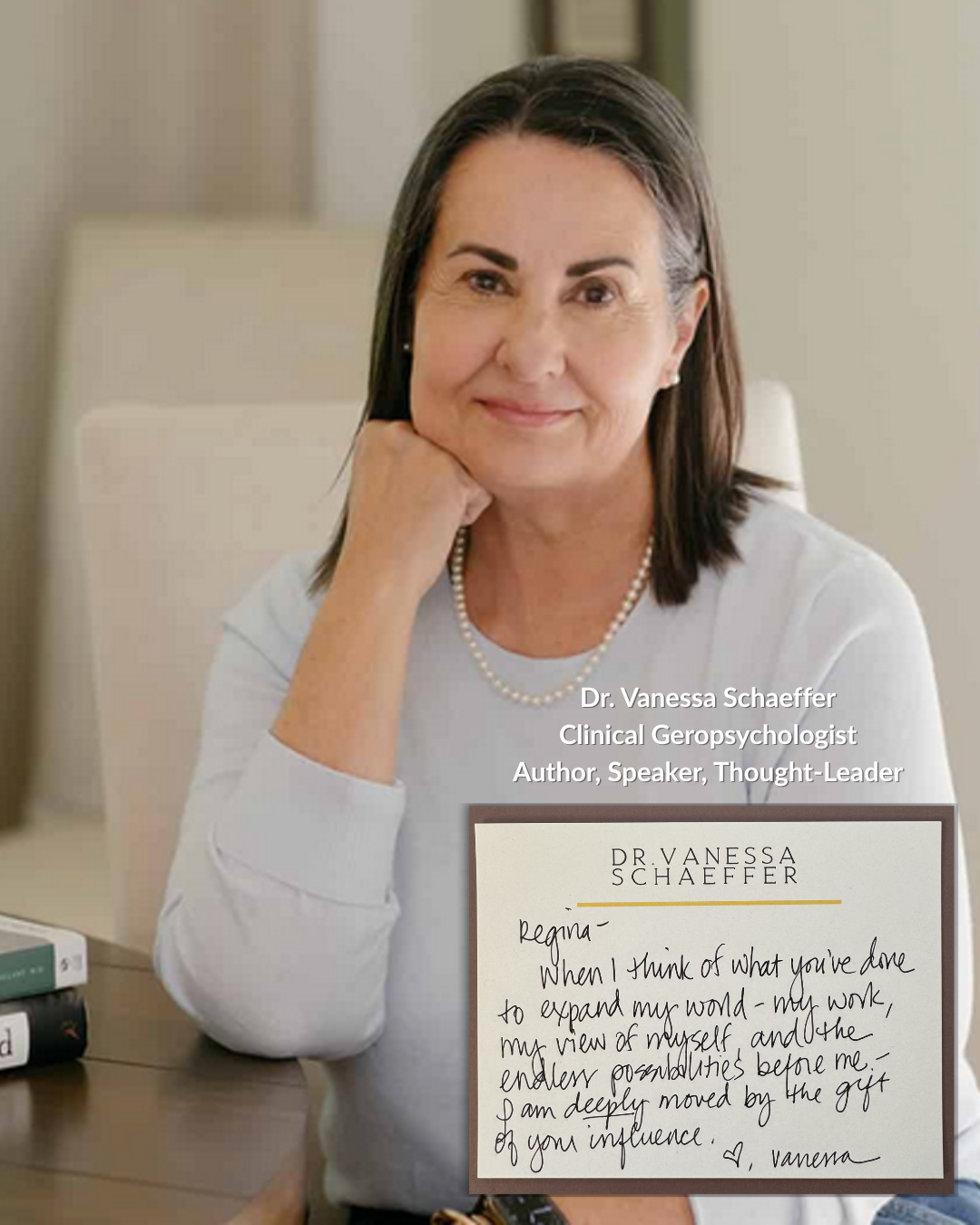
"Working with Dr. Regina Koepp in Consultation has been one of the most valuable parts of my professional growth. Her knowledge of aging and geropsychology is extraordinary, but what has meant just as much to me is the way she brings that knowledge and experience with such thoughtfulness, clarity, and generosity. Dr. Koepp has helped me think more deeply, see more accurately, and approach complex clinical situations with great confidence and discernment. I have grown tremendously through our work together, and I can say without hesitation that her Consultation has made me a stronger psychologist and has significantly deepened my capacity to serve older adults well."

Verified Student
Vanessa A. Schaeffer, Psy.D.
Clinical Geropsychologist · 32 years in practice

What Therapists Say About This Program


Register Today- Hurry! Registration Closes 10/2/26

Pick the level that fits your professional goals


Level 1 — Certificate

Earn Your Mental Health And Aging Certificate

$799 $3,401

An evidence-based, aging-informed training you can apply immediately in clinical work with older adults—while earning 18 CE credits and receiving ready-to-use resources.

  • 18-hour CE course
  • Bonus handouts + guides
  • Bonus mini trainings
  • 3 Community Connection meetings
  • Badge + certificate
  • Marketing toolkit
Levels 1, 2 + 3 — Certification Bundle

Become A Certified Mental Health + Aging Specialist

$1,699 $8,524

For clinicians ready to be a leader in aging-informed therapy. Includes the Level 1 Certificate, Level 2 Consultation Group, AND Level 3 application and bonuses.

  • 18-hour CE course
  • Bonus handouts + guides
  • Bonus mini trainings
  • 3 Community Connection meetings
  • Badge + certificate
  • Marketing toolkit

  • 5-week (90-min) small, closed consultation group
  • $200 Discount on Future Case Consultation Cohorts

  • Initial Certification Application Fee included
  • Certification and distinction as a CMHA Mental Health + Aging Specialist
  • Badge + certificate as a CMHA Mental Health + Aging Specialist
  • Provider Directory Profile
  • Quarterly alumni gatherings
Levels 2 + 3 Requirements:
  • Must have 100+ clinical hours working with adults 65+.
  • Must be licensed to practice therapy and be in good standing.
  • Must be able to provide therapy independent of a supervisor.
  • Level 3 requires successful completion of Levels 1 and 2.
  • Certification requires renewal every 2 years with CMHA to maintain certification status and access to alumni meetings.

Note: Requirements must be met in order to be a CMHA Mental Health + Aging Specialist. Certification is not guaranteed. Please review requirements carefully prior to enrolling.

Imagine Walking Into Session Fully Equipped


Instead of scrambling to fill knowledge gaps between clients, picture yourself with a comprehensive framework designed specifically for later life:


A clear framework for cognitive changes — Accurately distinguish between normal aging, dementia, depression, and delirium.
Strategies for complex family dynamics — Guide families from conflict to collaboration while protecting your client’s autonomy.
Evidence-based psychotherapies for late-life mental health — Effectively treat anxiety, trauma, substance use, depression, and insomnia in older adulthood.
Guidance for major life transitions — Support clients through retirement, caregiving stress, chronic illness, and grief with clarity and compassion.
An end-of-life psychotherapy framework — Help clients find meaning, dignity, and peace as they navigate their final chapter.


Older adults deserve specialized, compassionate care—and you deserve the training that allows you to deliver it.


The Mental Health + Aging Certificate is for you if...


You work with older adults in therapy, social work, counseling, care management, or healthcare — and want to feel fully prepared to meet their unique mental health needs.
You have ever questioned whether memory changes in a client are due to depression, dementia, or delirium — and want clear frameworks to guide assessment and evidence based treatment.
You navigate complex family dynamics — adult children pushing for control while your client insists on independence — and want strategies that balance autonomy with safety.
You want to deepen your therapy toolkit with evidence-based psychotherapies for depression, anxiety, trauma, substance use, insomnia, grief, and end-of-life concerns in older adulthood.
You are ready to have conversations around end-of-life psychotherapy, and choice at end of life — and want language and frameworks that honor dignity and meaning.
You value cultural humility and inclusion and want to provide equitable care for BIPOC, LGBTQ+, and other historically marginalized older adults.
You are committed to professional growth and want to stand out as the “go-to” clinician in the fastest-growing area of mental health care.


LEVEL 1: CERTIFICATE PROGRAM SCHEDULE

This 18-credit Certificate Program was designed to fit your life — four parts, released over 5 weeks at about 3 hours per week. Can't follow the schedule? No problem. You'll have lifetime access to return to the material whenever you need it.

This is rigorous, clinically relevant training — delivered on your terms.


Part 1: Foundations of Adult Development

Recorded Courses Delivered October 5, 2026


Module 1: Aging, Ageism & The Importance of Belonging

  • Demographics of aging
  • Ageism and ableism and their impact on health and well-being
  • Reflect on our own attitudes about aging and how they can impact care
  • Strategies to challenge ageism and improve mental health care for older adults
  • Intersecting minoritized identities among older adults (focusing primarily on race, disability, social class, and LGTBQ+ identities).
  • Being an ally to transgender older adults.
  • Practicing cultural humility in working with older adults
  • Resilience factors among minoritized older adults.
  • Recommendations to challenge ageism and create spaces where people belong


Module 2: Relationships

  • Social aspects of adult development 
  • Risks of loneliness and isolation among older adults
  • Benefits of social connection and belonging in older adulthood
  • Rates of sexual activity among adults 65 and older.
  • Benefits of intimacy among older adults
  • Statistics regarding sexually transmitted infections among older adults.
  • Attitudes about sexuality and aging among older adults, health care professionals, and others.
  • Having conversations about sex with older clients
  • Sexual health in the context of medical conditions
  • Limitations of the research and potential risks


Module 3: Common Life Issues and Transitions for Older Adults

  • Common transitions in older adulthood and which do older adults tend to be the most concerned about
  • Stages of retirement
  • Impact of retirement on mental health
  • Rates of older adults living with chronic health conditions
  • Impact of chronic health conditions on mental
  • Common transitions in living environments (from living with partner to living alone to living in assisted living or nursing homes)
  • Differentiating loneliness and isolation
  • Brief screening tools to identify loneliness and isolation in older adults
  • Age-specific referral sources and barriers to using resources


Part 2: Cognitive Changes and Ethical Considerations

Recorded Courses Delivered October 12, 2026


Module 4: Cognition and Aging

  • Typical vs a-typical changes in the brain from atypical changes in the brain with age
  • Treatable causes of cognitive impairment
  • Risk factors for dementia disorders
  • Mild Cognitive Impairment vs. Dementia vs. Alzheimer’s Disease
  • Dementia health disparities for minoritized individuals (specifically BIPOC and LGTBQ communities
  • Depression vs delirium vs dementia
  • Pathway for referrals for people with cognitive disorders in therapy 
  • Therapist’s role in working with individuals and families with dementia
  • Basic communication strategies for people with dementia


Module 5: Caregiver Family Therapy: Families with Dementia and Life-Altering Medical Conditions

  • Role changes in the older families
  • Ambiguous loss when caring for a loved one with dementia
  • Stages of caregiving and family conflicts in each stage
  • Caregiving dilemmas in negotiating safety with autonomy
  • Caregiver family therapy with families with dementia


Module 6: Ethical Principles and Common Ethical Dilemmas

  • Ethical principles pertinent to older adult care
  • Ethical dilemmas and considerations that can arise with older adult care
  • Strategies to prevent and resolve ethical dilemmas
  • Common types of elder abuse
  • Strategies to attend to elder abuse


Part 3: Mental Health and Older Adults

Recorded Courses Delivered October 19 + 26, 2026


Module 7: Evidence-Based Recommendations for Optimal Aging

  • Evidence-based strategies for optimizing well-being in older adulthood, including the science
  • Exercise
  • Nutrition
  • Cognitively stimulating activities
  • Mindset shifts
  • Benefits of mindfulness and meditation
  • Benefits of spirituality on health and well-being
  • Cognitive health benefits of nature 
  • Helping clients cultivate a sense of meaning and purpose in life 
  • Limitations of the research and potential risks


Module 8: Anxiety Disorders and Older Adults

  • Anxiety disorders among older adults
  • Anxiety symptoms
  • Link between anxiety and dementia 
  • Assessing anxiety disorders
  • Incorporate medical information and medications into diagnostic assessment
  • Measures for anxiety
  • Evidence-based treatments for anxiety in older adulthood


Module 9: Depression and Older Adults

  • Depression in later life
  • Link between depression and dementia
  • Standardized assessment tools for assessing depression in older adults
  • Evidence-based treatments for depression in older adulthood


Module 10: Insomnia and Older Adults

  • Rates and risk factors for insomnia in older adults
  • Link between sleep disorders and dementia
  • Assessment tools for assessing insomnia in older adults
  • Evidence-based treatments for insomnia in older adulthood

Module 11: Trauma and Older Adults, including Post-Traumatic Growth

  • Identify age-related factors associated with PTSD
  • Describe the impact of PTSD in older adulthood related to physical and cognitive health. 
  • Cumulative effects of racism-based trauma on health
  • Link between trauma and dementia
  • Assessment tools for PTSD in older adults
  • Evidence-based treatment for PTSD in older adults
  • Make recommendations within a trauma-informed framework
  • Define Post-Traumatic Growth and resilience related to older adults


Module 12: Suicide and Older Adults

  • Suicide rates among older adults
  • Older adult suicide risk compared to younger adults
  • How life altering health conditions and dementia disorders increase risk for suicide
  • Tools to assess suicide risk in older adults


Module 13: Substance Abuse and Older Adults

  • Unique considerations related to substance use disorders for older adults
  • Rates and risk factors for substance use 
  • Link between substance use disorders and dementia disorders
  • Assessment tools for assessing substance use in older adults
  • Age-sensitive substance use treatment recommendations


Part 4: End of Life Psychotherapy & Grief

Recorded Courses Delivered November 2, 2026


Module 14: End of Life Psychotherapy

  • Psychotherapy models for providing end of life psychotherapy
  • Strategies to communicate with older adults about end of life care
  • Health disparities for minoritized individuals and how this influences end of life 
  • Medical Aid in Dying and Right to Die
  • Differentiate medical aid in dying from suicide


Module 15: Grief

  • Types of grief: Anticipatory grief, ambiguous loss, disenfranchised grief, etc.
  • Review of the most common grief theories
  • Unique considerations for grieving older adults.
  • Prolonged grief disorder diagnosis, assessment, and evidence-based treatments
  • Grieving our own patients


I'm so glad you're here!

For more than 20 years, I’ve worked with older adults in some of the largest healthcare systems in the nation, like Stanford, Emory, the Veterans Health Administration, and seen first hand the barriers older adults face in getting the mental health care they need.

In fact, the majority of older adults with mental health concerns DO NOT get the mental health care they need, resulting in worse medical problems, increased risk of dementia, higher health care costs, family strain, and needless suffering.


This has inspired my mission of ensuring that you, and all mental health and senior care professionals, have the tools you need to treat the mental health needs of older adults.


I'm Dr. Regina Koepp. I'm a Stanford-trained, board certified clinical psychologist, clinical geropsychologist and founder of the 
Center for Mental Health & Aging, and the presenter of this course. I've dedicated my career to equipping mental health professionals with the skills needed to serve older adults.


With the Mental Health + Aging Certification you’ll learn my exact strategies for providing effective, ethical, and transformative care for older clients.


It's only with your help that older adults will get the mental health care they need. So, thank you for being here and doing your part.


What's The Difference Between a Certificate and Certification?


A Certificate says you completed the training. You've built specialized knowledge in a focused area of practice, documented at a point in time. No renewal required.

A Certification says you meet a standard. It's a time-limited credential confirming you've not only learned the material but demonstrated you can apply it — with defined criteria like licensure, clinical practice, and consultation. It renews, so your skills stay current.


In short: a Certificate confirms you completed the training. Certification recognizes you as meeting and maintaining a defined standard of professional competency.

You're Not Just Joining a Training. You're Joining a Community.


This work can be lonely. Many of us are the only one in our practice — sometimes the only one in our county — thinking hard about later life.

Here, you're in a room full of people who get it. Psychologists, social workers, counselors, and care managers who know what it's like when the family dynamics are impossible, when the cognitive picture won't come clear, when a client dies.


You'll meet them in live community gatherings, in small-group consultation, and in quarterly alumni connections — and you'll leave with the colleagues you call when a case is hard.


Join us in building a community and movement to change mental health care for older adults — one client, one clinician, one community at a time.


About Level 1: Mental Health + Aging Certificate - 18 CE Credit Course

By 2034, there will be more adults 65 and older than children under the age of 18. Mental health providers will be working with more older adults than ever before. With this in mind, mental health providers should tools to meet the presenting needs of older adults from loss of functioning, cognitive changes, grieving, to working with families.

If you've ever felt stuck in therapy with older adults, unsure of how to address memory concerns, grappled with moral dilemmas like balancing the "right to die" with suicidal ideation, and questioned how to include family members in your older clients' care without diminishing their autonomy, this workshop will provide tools for navigating these complexities. After completing this program, you'll not only have more confidence and competence in working with older adults, you'll feel eager and inspired to do so.

This comprehensive workshop is designed to provide clinicians with both an in-depth training in best practices as well as experiential activities and practical skills to improve your ability to meet the mental health needs of older adults.

In this dynamic, culturally inclusive workshop, you'll journey across the full arc of aging from typical aging to end of life care. You'll discover how negative stereotypes about aging impact health and wellbeing as we age, learn tools for addressing the most common mental health concerns, and best practices for navigating cognitive changes in therapy. You'll gain confidence in working with older families living with illness, including dementia disorders.

PART 1: FOUNDATIONS OF ADULT DEVELOPMENT

Module 1: Aging, Ageism & The Importance of Belonging (110min)

  • Demographics of aging
  • Ageism and ableism and their impact on health and well-being
  • Reflect on our own attitudes about aging and how they can impact care
  • Strategies to challenge ageism and improve mental health care for older adults
  • Intersecting minoritized identities among older adults (focusing primarily on race, disability, social class, and LGTBQ+ identities).
  • Being an ally to transgender older adults.
  • Practicing cultural humility in working with older adults
  • Resilience factors among minoritized older adults.
  • Recommendations to challenge ageism and create spaces where people belong
  • Module 2: Relationships (60min)

  • Social aspects of adult development
  • Risks of loneliness and isolation among older adults
  • Benefits of social connection and belonging in older adulthood
  • Rates of sexual activity among adults 65 and older.
  • Benefits of intimacy among older adults
  • Statistics regarding sexually transmitted infections among older adults.
  • Attitudes about sexuality and aging among older adults, health care professionals, and others.
  • Having conversations about sex with older clients
  • Sexual health in the context of medical conditions
  • Limitations of the research and potential risks
  • Module 3: Common life issues and transitions for older adults (60min)

  • Common transitions in older adulthood and which do older adults tend to be the most concerned about
  • Stages of retirement
  • Impact of retirement on mental health
  • Rates of older adults living with chronic health conditions
  • Impact of chronic health conditions on mental
  • Common transitions in living environments (from living with partner to living alone to living in assisted living or nursing homes)
  • Differentiating loneliness and isolation
  • Brief screening tools to identify loneliness and isolation in older adults
  • Age-specific referral sources and barriers to using resources

  • PART 2: COGNITIVE CHANGES AND ETHICAL CONSIDERATIONS

    Module 4: Cognition and Aging (2 hours)

  • Typical vs a-typical changes in the brain from atypical changes in the brain with age
  • Treatable causes of cognitive impairment
  • Risk factors for dementia disorders
  • Mild Cognitive Impairment vs. Dementia vs. Alzheimer's Disease
  • Dementia health disparities for minoritized individuals (specifically BIPOC and LGTBQ communities
  • Depression vs delirium vs dementia
  • Pathway for referrals for people with cognitive disorders in therapy
  • Therapist's role in working with individuals and families with dementia
  • Basic communication strategies for people with dementia
  • Module 5: Caregiver Family Therapy with families with dementia and life altering medical conditions (90min)

  • Role changes in the older families
  • Ambiguous loss when caring for a loved one with dementia
  • Stages of caregiving and family conflicts in each stage
  • Caregiving dilemmas in negotiating safety with autonomy
  • Caregiver family therapy with families with dementia
  • Module 6: Ethical Principles and Common Ethical Dilemmas (60min)

  • Ethical principles pertinent to older adult care
  • Ethical dilemmas and considerations that can arise with older adult care
  • Strategies to prevent and resolve ethical dilemmas
  • Common types of elder abuse
  • Strategies to attend to elder abuse

  • PART 3: MENTAL HEALTH AND OLDER ADULTS

    Module 7: Evidence-Based Recommendations for optimal aging (60min)

  • Evidence-based strategies for optimizing well-being in older adulthood, including the science
  • Exercise
  • Nutrition
  • Cognitively stimulating activities
  • Mindset shifts
  • Benefits of mindfulness and meditation
  • Benefits of spirituality on health and well-being
  • Cognitive health benefits of nature
  • Helping clients cultivate a sense of meaning and purpose in life
  • Limitations of the research and potential risks
  • Module 8: Anxiety Disorders (60min)

  • Anxiety disorders among older adults
  • Anxiety symptoms
  • Link between anxiety and dementia
  • Assessing anxiety disorders
  • Incorporate medical information and medications into diagnostic assessment
  • Evidence-based treatments for anxiety in older adulthood
  • Module 9: Depression and Older Adults (75min)

  • Depression in later life
  • Link between depression and dementia
  • Standardized assessment tools for assessing depression in older adults
  • Evidence-based treatments for depression in older adulthood
  • Module 10: Insomnia and Older Adults (30min)

  • Rates and risk factors for insomnia in older adults
  • Link between sleep disorders and dementia
  • Assessment tools for assessing insomnia in older adults
  • Evidence-based treatments for insomnia in older adulthood
  • Module 11: Trauma and Older Adults, including Post Traumatic Growth (90min)

  • Identify age-related factors associated with PTSD
  • Describe the impact of PTSD in older adulthood related to physical and cognitive health.
  • Cumulative effects of racism-based trauma on health
  • Link between trauma and dementia
  • Assessment tools for PTSD in older adults
  • Evidence-based treatment for PTSD in older adults
  • Make recommendations within a trauma-informed framework
  • Define Post-Traumatic Growth and resilience related to older adults
  • Module 12: Suicide and Older Adults (40min)

  • Suicide rates among older adults
  • Older adult suicide risk compared to younger adults
  • How life altering health conditions and dementia disorders increase risk for suicide
  • Tools to assess suicide risk in older adults
  • Module 13: Substance Use & (75min)

  • Unique considerations related to substance use disorders for older adults
  • Rates and risk factors for substance use
  • Link between substance use disorders and dementia disorders
  • Assessment tools for assessing substance use in older adults
  • Age-sensitive substance use treatment recommendations

  • PART 4: END OF LIFE PSYCHOTHERAPY & GRIEF – WEEK 5

    Module 14: End of life psychotherapy (75min)

  • Psychotherapy models for providing end of life psychotherapy
  • Strategies to communicate with older adults about end of life care
  • Health disparities for minoritized individuals and how this influences end of life
  • Medical Aid in Dying and Right to Die
  • Differentiate medical aid in dying from suicide
  • Module 15: Grief (60min)

  • Types of grief: Anticipatory grief, ambiguous loss, disenfranchised grief, etc.
  • Review of the most common grief theories
  • Unique considerations for grieving older adults.
  • Prolonged grief disorder diagnosis, assessment, and evidence-based treatments
  • Grieving our own patients
    1. 1. Demonstrate 3 ways that ageism impacts older adults' physical and mental health.
    2. 2. Illustrate intersecting minority identities among older adults to promote equitable mental health care
    3. 3. Review rates of sexual activity and sexually transmitted inflections among older adults.
    4. 4. Identify 3 common life transitions for older adults and ways in which these life transitions impact mental health
    5. 5. Examine the health consequences of social isolation and loneliness among older adults and provide recommendations for enhancing connection and belonging.
    6. 6. Differentiate mild cognitive impairment and dementia and the most common forms of dementia, including Alzheimer's Disease
    7. 7. Apply tools for the clinical assessment of cognitive impairment including cognitive screeners, mood screeners, functional assessment, and caregiver/collateral assessment.
    8. 8. Summarize stages of caregiving and older family conflicts in each stage
    9. 9. Describe ethical dilemmas and considerations that can arise with older adult care
    10. 10. List 5 evidence-based strategies for optimizing well-being and longevity in older adulthood
    11. 11. Describe anxiety and depression symptoms unique to older adults
    12. 12. Summarize evidence-based treatments for older adults related to depression, anxiety, and insomnia
    13. 13. Demonstrate 3 ways in which older adults may be more vulnerable to post-traumatic stress reactions.
    14. 14. Apply a tool for assessing suicide risk among older adults in order to guide intervention
    15. 15. Examine 3 unique concerns related to substance use disorders for older adults
    16. 16. Utilize a psychotherapy modality for providing end of life psychotherapy to facilitate cognitive and emotional processing of dying.
    17. 17. Differentiate desire to hasten death from suicidality among people living with terminal illness.
    18. 18. Describe Prolonged Grief Disorder Diagnosis, assessment, and evidence-based treatments
    1. 1. Enhance clinical competence in aging mental health by developing expertise in age-related psychological concerns, including depression, anxiety, cognitive decline, trauma, and grief.
    2. 2. Strengthen clinical skills in assessment, diagnosis, and treatment planning of the above conditions for older adult clients.
    3. 3. Advance ethical and culturally competent care by applying ethical principles and clinical guidelines in providing psychotherapy to older adults.
    4. 4. Utilize culturally responsive interventions to address the mental health needs of BIPOC, LGBTQ+, and other marginalized older adults.
    5. 5. Improve diagnostic and assessment skills by differentiating between typical vs. atypical cognitive changes, distinguishing mild cognitive impairment from dementia.
    6. 6. Utilize validated assessment tools for cognitive impairment, depression, anxiety, trauma, and suicide risk in older adults.
    7. 7. Expand treatment modalities for aging clients by integrating evidence-based psychotherapies for older adults, including CBT, mindfulness-based interventions, and end-of-life psychotherapy.
    8. 8. Apply grief-informed care models, including Prolonged Grief Disorder treatment strategies.
    9. 9. Strengthen family and caregiver interventions by facilitating family therapy approaches to address caregiving stress, ambiguous loss, and role changes.
    10. 10. Support caregivers in navigating ethical dilemmas and negotiating safety vs. autonomy concerns.
    11. 11. Promote longevity and mental well-being by identifying science-backed strategies for optimizing cognitive health, resilience, and emotional well-being in older adulthood.
    12. 12. Discuss the role of exercise, nutrition, social connection, and meaning-making in late-life mental health.
    13. 13. Bridge the gap between mental health and aging research and clinical practice by applying current research findings on aging, dementia risk reduction, and mental health treatment for older adults.
    14. 14. Evaluate how ageism and ableism impact the mental and physical health of older adults and explore strategies for combating bias in clinical settings.

    With successful completion of course requirements, this course is eligible for 18 Continuing Education (CE) Credit/18 CMC Contact Hours for therapists, counselors, social workers, psychologists, care managers, and more.

    Registrant is responsible for ensuring that CE credits meet the criteria for their own jurisdiction requirements.

  • Counselors
  • Social Workers
  • Marriage & Family Therapists
  • Addictions Counselors
  • Psychologists
  • Psychiatrists
  • Nurses
  • Aging Life Care Experts/Geriatric Care Managers
  • Students in these disciplines
  • This program focuses on disability, disability rights, LGTBQ identities, BIPOC older adults, and older adults with intersecting identities and asks participants to identify their own biases and assumptions related to these identitie. This program will help participants identify ways that they may be consciously and unconsciously reinforcing ableism, ageism, homophobia, transphobia, sexism, and other forms of oppression. The program provides tools and recommendations for dismantling these systems of oppression and promoting inclusion and equity for all people as well as recommendations for protecting human rights and dignity within mental health care.

    Dr. Regina Koepp is a Stanford-trained, board certified clinical psychologist, geropsychologist, and founder and CEO of the Center for Mental Health & Aging. Dr. Koepp is a sought-after speaker and educator, and provides staff training and continuing education courses to professionals on topics surrounding mental health and aging.

    She was formerly a lead psychologist at University of Vermont Medical Center, Assistant Professor at Emory University Department of Psychiatry, and psychologist at the Atlanta VA Health Care System, where she provided direct patient care and consultation on the Geropsychiatry Outpatient Mental Health team for more than a decade. During this time, Dr. Koepp also served on the VA Central Office's Geriatric Mental Health Field Advisory Committee.

    She is formerly Vice Chair of the Georgia Psychological Association Ethics Committee and served on the Atlanta VA Medical Center's Ethics Committee, the Clinical Advisory Workgroup, and as chair of the Psychology Professional Standards Board for several years.

    Dr. Koepp has been featured in the New York Times, NPR, Chicago Tribune, Next Avenue, AARP, and other national media outlets. She is a contributing writer at Psychology Today and Psychotherapy Networker, where she discusses mental health and aging.

    Dr. Koepp earned her doctorate at the PGSP-Stanford PsyD Consortium and completed her post-doctoral fellowship at Emory University Department of Psychiatry & Behavioral Sciences where she won the Richard W. Morrell Community Commitment Award.

    Financial: Regina Koepp, PSYD, ABPP is founder and owner of the Center for Mental Health & Aging (CMHA) and co-director of the CMHA CE Training Program. She serves on the board of GrayHawk Health. She received royalties from courses published with PESI, Inc.

    Non-financial: Regina Koepp is a member of ASA.

    Note: The CMHA CE Training Program advisory committee independently reviews Dr. Koepp's CE presentations to ensure that Dr. Koepp's presentations meet CE program requirements.

    There is no commercial support or conflict of interest for this CE program, content, or sponsor.

    100% Satisfaction Guarantee*

    Register without risk. If you're not completely satisfied, we offer a 7-day money back guarantee.


    We’re that confident you'll find this learning experience to be all that's promised and more than you expected.


    Register Today- Hurry! Registration Closes 10/2/26

    Pick the level that fits your professional goals


    Level 1 — Certificate

    Earn Your Mental Health And Aging Certificate

    $799 $3,401

    An evidence-based, aging-informed training you can apply immediately in clinical work with older adults—while earning 18 CE credits and receiving ready-to-use resources.

    • 18-hour CE course
    • Bonus handouts + guides
    • Bonus mini trainings
    • 3 Community Connection meetings
    • Badge + certificate
    • Marketing toolkit
    Levels 1, 2 + 3 — Certification Bundle

    Become A Certified Mental Health + Aging Specialist

    $1,699 $8,524

    For clinicians ready to be a leader in aging-informed therapy. Includes the Level 1 Certificate, Level 2 Consultation Group, AND Level 3 application and bonuses.

    • 18-hour CE course
    • Bonus handouts + guides
    • Bonus mini trainings
    • 3 Community Connection meetings
    • Badge + certificate
    • Marketing toolkit

    • 5-week (90-min) small, closed consultation group
    • $200 Discount on Future Case Consultation Cohorts

    • Initial Certification Application Fee included
    • Certification and distinction as a CMHA Mental Health + Aging Specialist
    • Badge + certificate as a CMHA Mental Health + Aging Specialist
    • Provider Directory Profile
    • Quarterly alumni gatherings
    Levels 2 + 3 Requirements:
    • Must have 100+ clinical hours working with adults 65+.
    • Must be licensed to practice therapy and be in good standing.
    • Must be able to provide therapy independent of a supervisor.
    • Level 3 requires successful completion of Levels 1 and 2.
    • Certification requires renewal every 2 years with CMHA to maintain certification status and access to alumni meetings.

    Note: Requirements must be met in order to be a CMHA Mental Health + Aging Specialist. Certification is not guaranteed. Please review requirements carefully prior to enrolling.

    Continuing Education Approvals


    Social Workers

    Center for Mental Health + Aging, #1801, is approved to offer social work continuing education by the Association of Social Work Boards (ASWB) Approved Continuing Education (ACE) program. Regulatory boards are the final authority on courses accepted for continuing education credit. ACE provider approval period: 3/25/2026-3/25/2029. Social workers completing this course receive 18 clinical continuing education credits.


    Psychologists

    Center for Mental Health & Aging is approved by the American Psychological Association to sponsor continuing education for psychologists. Center for Mental Health & Aging maintains responsibility for this program and its content.


    Counselors

    Center for Mental Health and Aging (CMHA) has been approved by NBCC as an Approved Continuing Education Provider, ACEP No. 7230. Programs that do not qualify for NBCC credit are clearly identified. Center for Mental Health and Aging (CMHA) is solely responsible for all aspects of the programs.


    Nurses
    CMHA is an approved provider by the American Psychological Association, which is recognized by the ANCC for behavioral health related activities.


    Care Managers

    CMHA is approved by the National Academy of Certified Care Managers (NACCM) as a continuing education provider, #21-905CMHA. This activity approved for 18 CMC contact hours


    Licensed Marriage and Family Therapists (LMFTs)

    Center for Mental Health & Aging (CMHA), Provider #1032775, is approved by the California Association of Marriage and Family Therapists to sponsor continuing education for California LMFTs, LCSWs, LPCCs, and LEPs. CMHA maintains responsibility for this program/course and it’s contents

    Center for Mental Health & Aging is approved by the American Psychological Association to sponsor continuing education for psychologists. In many state licensing jurisdictions, APA approved continuing education programs qualify for LMFT CE credits. See what your state requires here.


    FAQs LEVEL 1: CERTIFICATE

    This Mental Health + Aging Certificate Course (18-hour course) is released over a 5-week period, starting October 5, 2026. Each Monday morning at 9:00 am ET you'll receive several recorded video trainings (about 3 hours/week). Each module includes videos, slides, downloadable guides, resources, and a post-test to reinforce learning. We will host 3 live community gatherings on Zoom, which are optional.

    No, this course is a hybrid bringing you the benefits of both recorded video and live components. Since training LIVE with a world-renowned expert for over 20 hours could cost thousands of dollars, this format allows you to join Dr. Koepp at a price that's accessible. The modules labelled 1 through 15 are pre-recorded video trainings. PLUS, you'll have access to 3 LIVE Community sessions where you can join Dr. Koepp and your classmates LIVE to ask questions and go deeper into the work. See schedule for video availability schedule and LIVE Community session dates.

    Following purchase, you'll receive an email from "Dr. Regina Koepp- Center for Mental Health & Aging" with your receipt and another email with links to your courses (don't forget to check your spam folder).

    You can always log in to your account and access all of your courses this way as well.

    Any bonus courses will be available instantly.

    This 18-hour course will be released over a 5-week period beginning on 10/5/26. On each Monday at 9am ET, you'll receive several recorded trainings. This course will not be offered live.

    Great news — once you enroll, you'll have lifetime access to all course materials, so you can learn at your own pace!

    • CE Credits: To earn CE credits, you'll have approximately 3–5 years from the date the course was recorded.
    • Pathway to Level 3: Certification: If you're working toward Level 3 Certification, you'll have 2 years from the date you complete Level 1 to join the Level 2: Clinical Case Consultation series, which makes you eligible for Level 3. If more than 2 years have passed, you'd simply retake the certificate course before applying — we want to make sure the knowledge you bring into consultation is current, evidence-based, and fresh!

    The live Community Gatherings will happen via Zoom and will occur on the following Wednesdays. Live attendance is NOT required, but is strongly encouraged to gain full benefits from this program.

  • Wed 10/7/26 3:00-4:00pm ET on Zoom
  • Wed 10/21/26 3:00-4:00pm ET on Zoom
  • Wed 11/4/26 3:00-4:00pm ET on Zoom
  • Zoom link will be emailed to you following course purchase.

    No problem. Live attendance is NOT required to earn CE credits. Each live gathering will be recorded and uploaded into your student portal, so you can watch them when convenient.

    This is a limited time offer. To get access to this course and the free bonuses, you must purchase by the deadline. If you miss the deadline, we open this program 2-3 times per year.

    Participants will have their participation registered through the Center for Mental Health & Aging. To earn continuing education (CE) credits you must complete the following steps for on demand/pre-recorded courses:

    Step 1: Attend 100% of the course. Attendance is tracked via the online platform.
    Step 2: Successfully pass the course post-test (for pre-recorded courses only; You have a total of 3 attempts to pass the post-test).
    Step 3: Complete the Course Program Evaluation & Attestation
    Step 4: Download Your Certificate

    Certificates of completion will be emailed immediately following submission of electronic survey and also available for download in the course platform. It's that simple!

    Please note: CE credits are only available following successful completion of the ENTIRE program; they are not available following each module.

    All registrants will receive a displayable certificate of completion and a digital badge upon completion of course and post-test. Please note that the displayable certificate of completion indicates that you have finished the training; it does not verify your level of expertise, competency, or proficiency in the subject matter.

    No. A certificate is a document issued upon the completion of a training program. It signifies that you have trained on specific skills, have knowledge in a particular subject, or as in this case, have trained with a particular individual. Our Level 1: Mental Health + Aging Certificate Program offers you a Professional Certificate.

    Certification on the other hand is a formal recognition of your expertise and competence. Certification often requires you to meet specific standards, pass rigorous exams, and many even include additional practice, consultation, supervision, and evaluations. Our Level 3: Mental Health + Aging Certification offers you certification as Certified Mental Health + Aging Specialist.

    This 18-hour CERTIFICATE program was reviewed by licensed mental health professionals and subject matter experts who, following in-depth review of this program, agreed that this program possesses the quality, depth, and breadth of training to merit certification in the stated topic.

    This program was reviewed by the following subject matter experts:

    Jennifer Smith, PsyD

    Dr. Jennifer Smith is a Geropsychologist and Geriatrics Psychology Program Manager. She is also an Assistant Professor of Psychiatry and Behavioral Sciences at Emory University School of Medicine. She trains mental health professionals in the use of Acceptance and Commitment Therapy. Dr. Smith trains Psychology Interns and Postdoctoral Fellows in the use of Psychological Assessment. She is a graduate of the American Psychological Association Leadership Institute for Women in Psychology. Dr. Smith is a former President of the Georgia Psychological Association and a current Board Member of both the Georgia Psychological Association and the Georgia Psychological Foundation. She is the Georgia Representative for the American Psychological Association Council of Representatives. She believes being a psychologist is the best job in the world.

    Vonetta Dotson, PhD

    Dr. Dotson is a Professor of Psychology and Gerontology at Georgia State University, Senior Project Scientist for Behavioral Health at NASA (KBR), and Founder and President of CerebroFit Integrated Brain Health. She completed her doctoral training in clinical psychology at the University of Florida with a specialization in neuropsychology and a certificate in gerontology. She completed her postdoctoral training at the National Institute on Aging Intramural Research Program. Dr. Dotson's research and clinical activities focus on positive and negative modifiers of brain health, including the intersection of depression with cognitive and brain aging.

    Jennifer Steiner, PhD, ABPP

    Dr. Jennifer Steiner is a board certified clinical health psychologist, founder of Beyond the Body Health Psychology Services, LLC, Co-Director of Center for Mental Health & Aging's Continuing Education Program, Adjunct Faculty at Emory School of Medicine, Board Member of the Georgia Psychology Association Board of Directors, Co-Chair of the Continuing Education Committee for Georgia Psychological Association, and Member of the Committee on Health Psychology and Integrated Practice. Dr. Steiner's research and clinical practice focuses on chronic pain and interventions for chronic pain.

    Endsley Real, LCSW, MPH

    Endsley Real is a licensed clinical social worker. She has over 10 years of administrative experience in directing programs for those with substance use disorders, mental illness, and those living with HIV. Ms. Real is currently Chair of the Nominating Committee for Association of Social Work Boards charged with selecting the slate for the ASWB Board of Directors. She served for 5 years on the State of Georgia Composite Board for Professional Counselors, Social Workers, and Marriage and Family Therapist including 2 years as the board chair. Ms. Real obtained her MSW from Clark Atlanta University in 1997 and obtained an MPH from Emory University in 2014.

    FAQs LEVELS 2 + 3: CERTIFICATION

    This Mental Health + Aging Certification program (Levels 1, 2, and 3) was reviewed by subject matter experts who, following in-depth review of this program, agreed that this program possesses the quality, depth, and breadth of training to merit certification in the stated topic.

    This program was reviewed and approved by the following subject matter experts:

    Jennifer Smith, PsyD

    Dr. Jennifer Smith is a Geropsychologist and Geriatrics Psychology Program Manager. She is also an Assistant Professor of Psychiatry and Behavioral Sciences at Emory University School of Medicine. She trains mental health professionals in the use of Acceptance and Commitment Therapy. Dr. Smith trains Psychology Interns and Postdoctoral Fellows in the use of Psychological Assessment. She is a graduate of the American Psychological Association Leadership Institute for Women in Psychology. Dr. Smith is a former President of the Georgia Psychological Association and a former Georgia Representative for the American Psychological Association Council of Representatives. She believes being a psychologist is the best job in the world.

    Vonetta Dotson, PhD

    Dr. Dotson is Chief of Neuropsychology at Brigham and Women's Hospital, Research Professor of Psychology and Gerontology at Georgia State University, and Founder and President of CerebroFit Integrated Brain Health. She completed her doctoral training in clinical psychology at the University of Florida with a specialization in neuropsychology and a certificate in gerontology. She completed her postdoctoral training at the National Institute on Aging Intramural Research Program.

    Dr. Dotson's research and clinical activities focus on positive and negative modifiers of brain health, including the intersection of depression with cognitive and brain aging and the impact of health disparities on brain health.

    To be eligible for the 5-week clinical consultation and certification, you must have earned a minimum of a master's degree in a therapy profession AND hold a state or national license as listed below:

    • Psychologists
    • Counselors
    • Social Workers
    • Marriage & Family Therapists
    • Licensed Creative Arts Therapists
    • Psychoanalysts
    • Board Certified Behavioral Analysts

    Applicants must attest that they have completed a minimum of 100 contact hours of clinical work with older adults (age 65+) over the course of their professional career. This experience may include individual therapy, group therapy, assessment, consultation, or other direct clinical services.

    The certification has 3 core requirements:

    (1) Complete the Level 1: Mental Health + Aging Certificate Course (18 hours of didactic training)

    (2) Complete Level 2 Clinical Case Consultation series — a 5-week, small group experience totaling 7.5 hours. Participants must attend a minimum of 4 out of 5 sessions (one absence permitted with advance notice).

    (3) Submit a formal application for Certification that includes your current professional license, training completion certificates, attestation of 100+ clinical hours with older adults, and agreement to the Professional Code of Ethics.

    The Clinical Case Consultation series is one of the most professionally enriching aspects of this program.

    You'll join a small cohort of 6–10 fellow clinicians for 5 consecutive 90-minute live Zoom sessions, facilitated by experienced geriatric mental health specialists. Here's an overview of the structure, expectations, and requirements.

    Structure

    • Duration: 5 consecutive weeks of 90-minute group consultation sessions
    • Group Size: Small cohorts of 6–10 participants to ensure meaningful participation and peer interaction
    • Format: Live Zoom sessions
    • Attendance Requirement: Participants must attend a minimum of 4 out of 5 sessions (one absence permitted with advance notice)

    Expectations and Requirements

    All participants are expected to:

    1. Present a Clinical Case: Each participant will formally present at least one case involving work with an older adult client (age 65+) during the consultation series. Presentations should include background, presenting concerns, assessment findings, diagnostic formulation, treatment approach, and clinical challenges or questions. You will not need to provide a written case formulation. Simply a case for discussion.
    2. Active Participation: Participants are expected to actively engage in case discussions, offer thoughtful feedback to peers, ask clarifying questions, and contribute clinical insights based on their own experience and training.
    3. Apply Evidence-Based Knowledge: Participants should integrate knowledge from their didactic training into case discussions, demonstrating understanding of geriatric mental health principles and best practices.
    4. Maintain Confidentiality: All case material shared in consultation must be de-identified. Participants must maintain strict confidentiality regarding all discussions and agree to group confidentiality norms.
    5. Demonstrate Professional Respect: Participants should engage with peers and facilitators in a collegial, supportive manner that promotes a safe learning environment and respects diverse clinical perspectives.
    6. Keep Your Video Camera On: Participants are asked to be on camera for the duration of each consultation session. Showing up visibly — not just verbally — is one of the ways we build the community, psychological safety, and mutual trust that make meaningful clinical consultation possible.

    We're excited to announce our upcoming Consultation Group dates! All sessions are held on Fridays via Zoom:

    📅 Session Dates: Fridays: Nov 13 • Nov 20 • Dec 4 • Dec 11 • Dec 18, 2026

    No meeting Friday, Nov 27 — Thanksgiving break

    🕐 Available Cohort Times:

    • Fridays 12:00–1:30 pm ET (opens first)
    • Fridays 2:00–3:30 pm ET (opens when first cohort fills)
    • Fridays 10:00–11:30 am ET (opens when second cohort fills)

    Important: To keep cohorts balanced and fair, participants are assigned to a cohort. You'll receive your cohort time and Zoom link after enrollment.

    Participants are required to attend a minimum of 4 out of 5 sessions for successful completion. One absence is permitted with advance notice. We strongly encourage full attendance, as the peer learning and case discussion that unfolds across sessions builds meaningfully over time. All sessions are held live via Zoom.

    CE credits are not provided for the consultation group. However, for some disciplines in some states, consultation hours may count toward licensure requirements. A certificate of completion will be provided with successful completion of consultation which some jurisdictions may accept. You are responsible for investigating the licensure requirements for your license(s).

    We recommend that you finish the Level 1 Certificate Course prior to starting the consultation.

    Each participant is expected to formally present at least one clinical case involving an older adult (age 65+).

    Your presentation should include background information, presenting concerns, assessment findings, diagnostic formulation, your treatment approach, and any clinical challenges or questions you're navigating. You will not need to provide a written case formulation. Simply a case for discussion.

    Following enrollment, you will be given a guide to help you prepare for your case presentation.

    You'll also be expected to actively participate in peer discussions, offer thoughtful feedback, and maintain strict confidentiality regarding all case material shared in the group.

    Wonderful — you're already well on your way! Since you've completed the Level 1 Certificate, you've fulfilled the didactic training requirement for certification. To continue your journey, click here to register for the Level 2: Clinical Case Consultation series.

    Consultation Groups are offered a couple of times per year, generally in the Spring and Fall. The best way to stay informed is to keep an eye on your email and check the Level 2: Clinical Case Consultation series and Certification Overview page for upcoming group dates and enrollment windows. Spots are limited to ensure small, intimate cohorts — so when a group opens, we encourage you to enroll promptly!

    Once you've completed both the Level 1: Certificate and the Level 2: Case Consultation series, you'll complete and submit your application through our online applicant portal here.

    Your application will include:

    • A copy of your current professional license
    • Your Level 1 CEU Certificate
    • Your Level 2 Consultation completion certificate (issued after successful completion of consultation group)
    • Attestation of your 100+ clinical hours with older adults
    • Your agreement to the Professional Code of Ethics

    Applications are reviewed within 2–3 weeks of submission.

    Upon approval, you will receive:

    • Official Mental Health + Aging Certification certificate
    • Distinction as a CMHA Certified Mental Health + Aging Specialist
    • Digital badge for use on professional websites and email signatures
    • Listing in the Center for Mental Health + Aging online directory of certified professionals

    Your certification is valid for 2 years. To maintain it, you'll complete a straightforward recertification process that includes 8 hours of continuing education specifically related to mental health and aging, a current unrestricted professional license, a completed recertification application, and a $199 USD recertification fee.

    You can find answers to all of your questions about Certification and Recertification here: https://courses.mentalhealthandaging.com/p/mha-certification-overview

    You can find answers to all of your questions about Certification and Recertification here: https://courses.mentalhealthandaging.com/p/mha-certification-overview

    The Mental Health + Aging Certification positions you as a recognized specialist in one of the fastest-growing and most underserved areas in mental health care. It enhances your professional credibility, distinguishes you among peers, expands your referral networks, and opens doors in healthcare settings actively seeking geriatric mental health expertise. Perhaps most meaningfully, it equips you to provide higher-quality, age-affirming care to older adults — a population that deserves nothing less.

    You have 2 years from the date of completing your Level 1: Mental Health + Aging Certificate to participate in the Level 2 Clinical Case Consultation series. If more than 2 years have passed since completing Level 1, you would need to retake the certificate course before applying for certification. We want to ensure that the knowledge you bring into consultation is current, evidence-based, and fresh in your mind!

    We so appreciate your dedication to serving older adults — and your experience is exactly the kind of wisdom that enriches our consultation groups! Unfortunately, completion of the Level 1: Mental Health + Aging Certificate is required before enrolling in the Level 2 Consultation/Certification series. This ensures that all participants share a common evidence-based framework, which makes for richer, more connected clinical conversations.

    The good news? Many seasoned clinicians find that Level 1 both validates what they already know and fills in meaningful gaps. We think you'll find it well worth your time.

    We appreciate your commitment to specialized training! Unfortunately, at this time we are only able to accept the Level 1: Mental Health + Aging Certificate Course as the qualifying didactic requirement for certification. This ensures a shared learning foundation across all certification candidates. We may revisit this policy in the future, and we'll communicate any changes through our newsletter and website. In the meantime, we invite you to explore the Level 1 course — we think you'll find it a genuinely enriching experience.

    We'd love to hear from you!

    Reach out to the Center for Mental Health + Aging at support@cmhaging.com or learn more about certification here:

    FAQs - General

    We've actually moved away from early bird pricing so that every student gets the same fair rate from day one — no more waiting or watching for a deal!

    Yes! Enrolling 3 or more people? We'd love to help. Reach out to us at support@cmhaging.com and we'll take great care of your group. 🎉

    Center for Mental Health & Aging is committed to accessibility and non-discrimination in continuing education activities and will conduct all activities in conformity with the American Psychological Association's Ethical Principles for Psychologists, NASW, NBCC, CAMFT, NACCM. If participants have special needs, reasonable efforts will be made to accommodate them. Please contact support@cmhaging.com with questions, concerns or to request special accommodations.

    CMHA will respond to grievances in a reasonable, ethical, and timely manner. Grievances may be submitted by course participants in writing to support@cmhaging.com. CMHA's complete Grievance Procedure will be provided upon request. You may request Grievance Procedure by emailing support@cmhaging.com.

    The following system requirements help to reduce tech problems:

    • Participants need reliable internet and basic proficiency with a computer or mobile device. Required activities are completed in our online course portal. Chrome and Firefox are the recommended browsers to best navigate our online course portal. Live programs require proficiency with Zoom.

    All on demand/pre-recorded courses are backed by a 7-day money back guarantee. Please note that payments made via Credit Card have certain fees associated with them, some of which are non-recoupable and are therefore non-refundable by Center for Mental Health & Aging. Therefore, payments made by Credit Card will have a three percent (3%) credit card fee deducted from the refund. Should you have any questions regarding our refund policies, please contact support@cmhaging.com.

    For additional questions email support@cmhaging.com.

    Registrant is responsible for ensuring that CE credits meet the criteria for their own jurisdiction requirements.

    Content and materials in this course may include interventions and modalities that are beyond the authorized practice of your profession. As a licensed professional, you are responsible for reviewing the scope of practice, including activities that are defined in law as beyond the boundaries of practice in accordance with and in compliance with your profession's standards.